Sunday, March 9, 2014

Lab #6 Evolution and Adaptations.

Adaptation radiation and how the different paper forms made by the finches helped or hurt that finches species.

Darwin  sailed at the age of 22 in 1831. He discovered 13 species of finches among the Galapagos. The changes in the finches didn't have explanation, but the changes have been in finches for generation, in the necessity of survival there beck adapted to eat from different part of a tree, for the big among of island populations. The finches changes are trough its genetic(Genotype) with is pass to the chick by them parents, letting the things that they didn't use behind. 

Resource:Darwin's Finches, Decent with Modification and Natural Selection. Available from: http://www.fossilmuseum.net/Evolution/DarwinsFinches.htm

For more information also visit:  Evolution of finches.

Species Competition
In order to see how the change happen in an species we make an experiment with candies that represent the preys in an environment. The competition is big, and species change or disappear how we are going to see in the figure 1. 
Figure 1. This graph represent five generation of species change where the predator competed and end the species with the time.  
The Percent of Surviving prey (candy type).Having the results of  survivor species in the figure 1. The next graph represent the percent of a 100% of population for each specie survivor in five generation.
Figure 2. Surviving prey during five generations competition  between predators. 


What is Behavioral Adaptation: If an animal or plant is to survive it must be able to fit in with the environmental conditions which occur in its habitat. This fitting in is called adaptation. Every living thing is adapted to enable it to cope with a particular habitat’s environmental factors such as the air, water, soil, light and temperature.(Adaptation for Survivor).

Animals adapted to live where predator are, by protecting them with spines. In this case it is the fox porcupine, who has develop spines to protect themselves from predator, and also from the human who have found out that this spines can help the molar pain.

Figure 3. Dog bitten by a fox porcupine, nice example of how well the adaptation works for the fox.


Figure 4. Porcupine foxes also have developed color to help them in different environments to hit in places.

Animal adapted to live in cold temperature, some animals develop a heavy coat, or produce oil in their feathers. The polar bear is a warm-blooded mammal, capable of maintain the body with an average temperature to survivor. It also is able to keep fat for the additional insulation. (wildlife in winter-adaptation for survivor) 
 Figure 4. Polar bear with a little baby who needs to be able of keeping fat, and warm-blood in order to survive.

El Salvador specie adaptation example.
The otters in El Salvador are a protected specie, because they are every year less for the pollution of the water on rivers. This little animals are very friendly to humans which also permit to people got them for the skin to fabricated items with it. The otters are a example of adaptation, because they can live in the wather where they eat fishes, and also in the different types of forest, savannas, and coastal marshes.(FUNZEL) 

Figure 5. Otter of El Salvador. (picture by FUNZEL).
Figure 6. Otter cut in the back by people.

The adaptation of the species not all the time is for protect themselves from predator in this case we have the otter who needs to be protect from the humans, for being a friendly animals.


Monday, February 10, 2014

Lab #5 Tropical Ecology

Seed Germination and Productivity


Question: Can Plants germinate in the dark?
Hypotheses: Seeds can not germinate in the dark.
Treatments: Seeds germination in the light, and seeds germinate in the dark.
Control: Dark Germination.

Methods:

Get 6*6 tray
Radish seeds 
Dark soil
Add soil in the tray almost to the top
water the soil
plant for seeds of radish in each spot
Let one in the light,and other in the dark

Results

Seeds germination in the dark have a percent of 34.7% in this experiment (50/144*100=34.7%) 

Seeds germination in the light gave a percent of 38.19% (55/144*100=38.19%)

The difference between seed that germinated in the dark, and the seed that germinated in the light were the yellow color given for dark treatment, long, some of them without tip, and skinny seedlings, while the seeds in the light were green, in good shape, and ready to keep growing.


Why do the seeds germinate in the dark?
  •  The seed germinates, because it is compost for an embryo which a plant produce with one leaf named monocotyledon, or two leaves named dicotyledon. The embryo have good amount of energy to make the seed open the shell, and germinate making at the same time the leaves go up looking for sun while the roots goes down reaching water, and soil nutrients. After the germination process the plant have utilized the sugar that was store in the little leaves of the embryo. It means that now the plant need to do photosynthesis to keep growing, if the plant stay in the dark it won't work the chloroplasts which have in it the chlorophyll, (the one that look green for us, or which we see green). [Tropical Ecology Shadia Duery. year 2014.]  
  • The next graph shows the differences of the seedlings height, and clearly showing how much impact does the photosynthesis have in the growth of plants. At the same time this graph shows that our theory was wrong, because the seeds can germinate in the dark.

Seedlings Treatment and Height Comparison
This Graph represent the seedlings growth in comparison with treatment in the dark and light, showing that the dark treatment have the most growth.

The weight of the plants is very important when they are wet, and dry. It's a way to compared the net of a plant. The next graph shows the variation in weight for this experiment.


The seedlings weight was a little different, letting us know that seeds have the potential to germinated with light or without light, just with some differences.
  • Color, the treatment in the dark was yellow, and the light treatment green.
  • Size and shape, Dark treatment did have problems with tip of the seedlings or thinness, the light treatment was in good shape.


Sunday, February 2, 2014

Lab #4 Tropical Ecology Sandy River(Marmot Dam Removal)

  Tropical Ecology (Field Trip to Sandy River, OR)                                                Jan 28, 2014

Around the Sandy river was the industry of logs for hundred years. Then PGE bout the land  and they build a dam called: Marmot Dam in 1930's. In 2007 the dam was destroyed, also the buildings. After that the Western River Conservation (non-profit organization) bought the land to give it to the government, which the purpose to make it public, and conserve the nature. Now in days, next to the river is a flat place where the buildings were, in which just some pieces of concrete remains from the dam. It is also a fact that make the soil compact, to plant trees the soil need a preparation process.


PGE people sell the place because, the license for the dam was almost expired, and they have to pay a lot money for it. At this time maybe they will have the request to build a pass for the salmon fish, thing that also will charge them millions of dollars. The demolition of the dam let amount about three years of sediments, because even that the dam was old some sediments were washed during that time through it. The Sandy river is called like that for the sediments that it always get from Mt. Hood, and the snow that melted up there. The people that was working in the removal of the dam inspect the area, and they didn't take any sediment out, they wait for the rain and the river do his work.   


The engineers knew that the river can handle it, because the studies that they did demonstrated that the river operated with a natural power. When the rain came they were amazing by the power of the water, in a day it was almost gone letting they see the button of the river, by the next rain the sediment was gone. It didn't have a big impact in the fish, because they travel river up to lay their eggs. The sediment that was left was found three miles downstream with little level of toxicity. Everything come to normal again, just the breech that was build to manage the dam stay in place, now it serve to cross the river and get to the old growth forest. 


The government, and Sandy Watershed Council  are developing a project in which the main goal is to build camp kiosks  information, bathrooms, tables, and the rich vegetation. Other people will build all of this things first, but in this case they are doing it backwards. The first step was prepare the soil, and plant mix of evergreen trees, to see which ones will survive at there. The answer to this is that the cedar are doing well while the others had die. Other people maybe will start the bathrooms and tables for people to come and stay there, but in this case the forest is important for this people to come.


Sunday, January 26, 2014

Lab #2

Tropical Ecology.

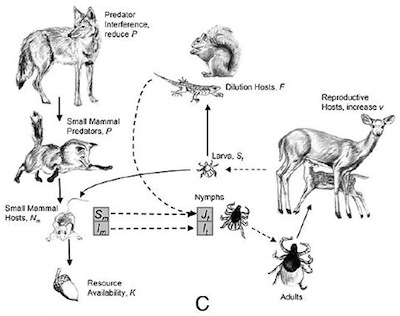
1. The different interaction of living organisms and non-living organisms. Why it is important for the environment. The life cycle explain why we need to preserve our sources. The next picture show how we do us a living organisms.


Environmental Studies, University of California Santa Cruz.Available from:
http://envs.ucsc.edu/news-events/news/images/lyme-blog480.jpg


2. My community Cuisnahuat El Salvador, deals with the lack of garbage service, and air pollution for deforestation. It is an opportunity to work for the community and engage people in it.

3. During this time in Oregon, I have been  working us a group with people of seven countries, I learned how to connect with others, and listen their ideas. I have learned how to use the three R system (Reduce, Reuse, and Recycle) to develop a project base in the garbage prevention. Identification of vegetation. Creation the maps after collect the data, and watershed processes to identify sources in creeks.

4. Ecology issue in El Salvador.
El Salvador is a place with rich diversity in the ecosystem, but is also exploited by mining companies damaging the ecosystem, in the video these people tell us what is happening and the investigations that have been doing during this time.


5. El Salvador: Flora and Fauna.
Children explaining some of the issues with plants and animals happening in El Salvador, to make people aware of the valuable sources that we have, and that they are important in the ecosystem to have a good balance.
https://www.youtube.com/watch?v=dfsZc2bh63M